
6 Essential Tips for Granite Countertops Care
Granite countertops can add distinctive color and pattern to kitchens and other areas of the home. Proper care can help maintain their appearance over time. This article covers practical considerations for cleaning, protecting, and caring for granite countertops, along with guidance for selecting and planning a natural stone countertop project.
1. The Basics of Granite Countertops
Learn About Granite
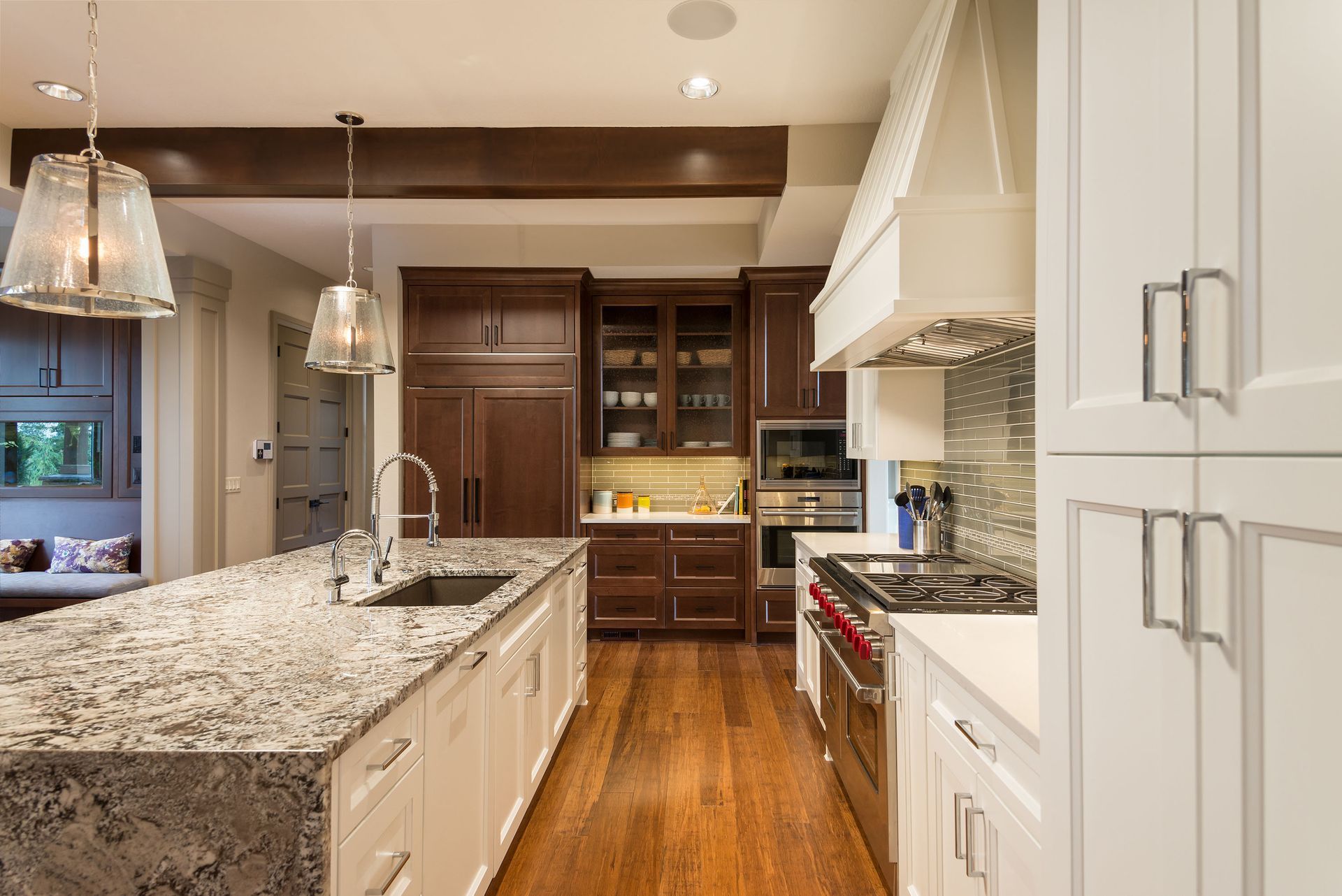
Granite is a natural stone with individual variations in color and pattern. Because each slab can have its own appearance, photographs and small samples may not provide an exact representation of the finished material. Viewing full slabs can help homeowners evaluate the stone's characteristics before selecting granite countertops.
Consider Natural Stone Variation
Natural variation is one consideration when selecting granite. Differences in color, pattern, and veining can affect how a slab looks in a finished space. Consider how the stone will coordinate with cabinetry, flooring, backsplashes, and other design elements before selecting granite countertops.
Compare Countertop Materials
Granite is one of several countertop materials available for residential projects. Other natural stone options include marble and quartzite, while quartz provides an engineered alternative. According to Houzz, an estimated 23% of renovating homeowners chose granite, and around 9% selected marble for their kitchen countertops.
View Full Stone Slabs
Viewing full slabs can provide a better understanding of a natural stone's appearance than relying only on photographs or small samples. This is particularly useful when the color and pattern of the countertop are important parts of the overall design. Seeing the full slab can also make it easier to consider how its natural characteristics will work within the space.
2. The Care of Granite Countertops
Clean Countertops Regularly
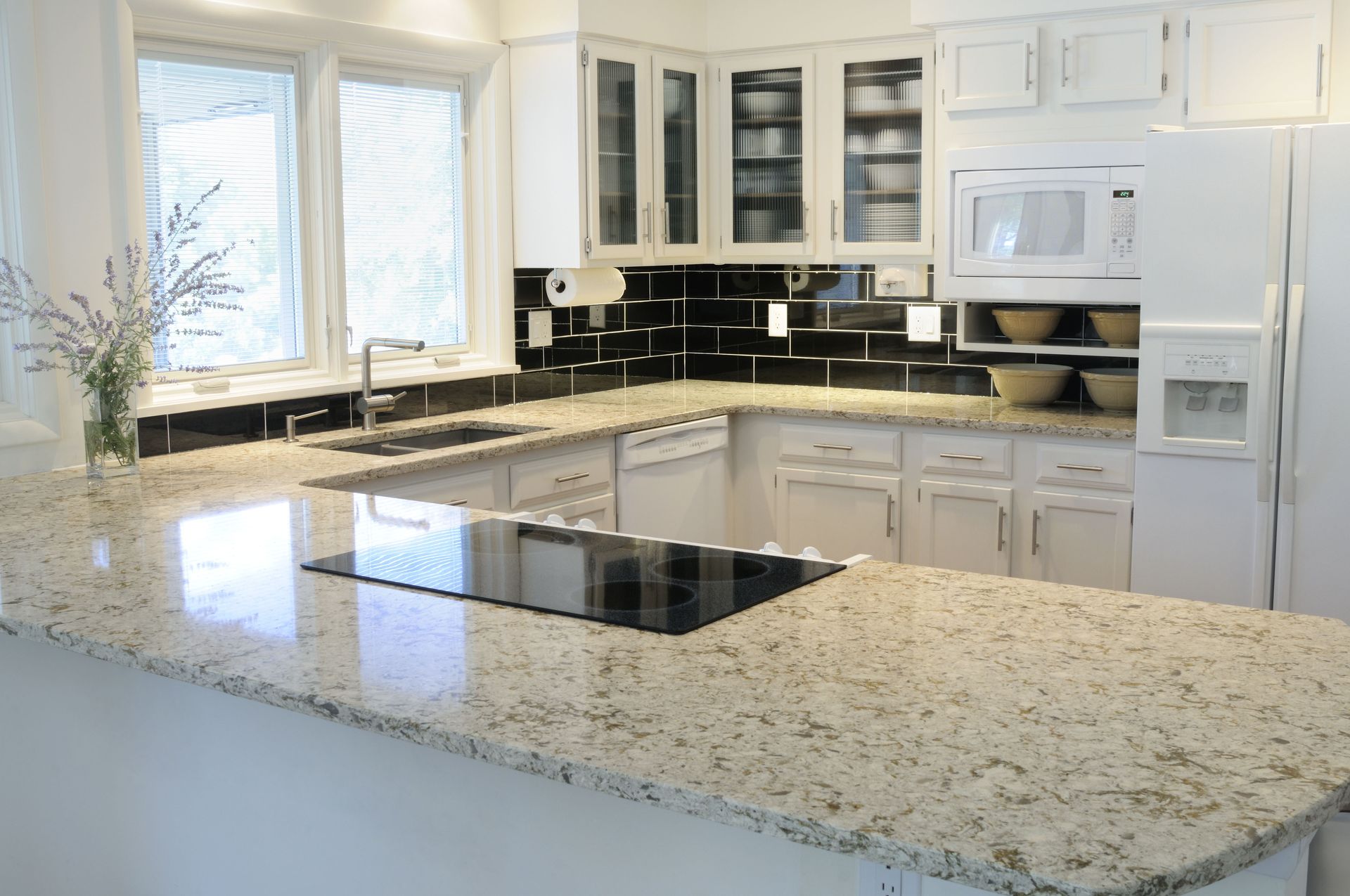
Regular cleaning can help keep granite countertops looking neat and well-maintained. Remove surface debris and clean the countertop according to the care recommendations appropriate for the particular stone. Wiping the surface after use can also help keep residue from accumulating.
Use Appropriate Cleaning Products
When selecting cleaning products for a granite countertop, consider products intended for use with natural stone. Avoid abrasive materials or cleaning products that may be inappropriate for the stone. Following the product manufacturer's directions can help reduce the risk of damaging the countertop's surface.
Address Spills Promptly
Promptly cleaning spills can help keep the countertop surface clean and reduce the amount of time liquids remain on the stone. Pay particular attention to spills that could leave residue or affect the appearance of the countertop. Regular attention to the surface is a practical part of ongoing countertop care.
3. The Prevention of Countertop Damage
Handle Items Carefully
Taking care when placing or moving objects across a granite countertop can help reduce the likelihood of accidental damage. Avoid dropping heavy objects onto the surface and use care when moving appliances, cookware, and other substantial items across the countertop. Thoughtful handling can help keep the surface in good condition during regular use.
Protect High-Use Areas
Areas that receive frequent use may benefit from additional attention. Cutting boards and other appropriate protective surfaces can provide a designated area for food preparation while helping separate everyday activities from the countertop itself. Using these surfaces can also make it easier to organize frequently used areas.
Consider the Countertop Layout
Planning the countertop layout carefully can help account for the way the space will be used. During a countertop project, factors such as dimensions, cabinet layout, sink placement, and the overall arrangement of the space can be considered before fabrication begins. Careful planning can help homeowners create a countertop that fits the intended space and use.
4. The Planning of Granite Countertops
Choose Your Stone
Granite is one of several natural stone options available for countertops. When selecting a material, consider the appearance you want, the characteristics of the space, and your project budget. Viewing full slabs can also help you determine whether a particular granite works with the rest of the room.
Request an Estimate
Countertop projects can begin with an estimate based on provided dimensions. An estimate can help homeowners understand the scope and budget of a project before moving forward with material selection and fabrication. Having this information early can make it easier to plan the next steps.
Schedule a Consultation
An in-home consultation can provide an opportunity to discuss the countertop project in the space where the work will take place. A free, in-home consultation is available within a 30-mile radius of the company's locations. This provides an option for homeowners who want to discuss their project and material needs.
Complete the Template
Once the project is ready to move forward, a template crew can visit the property to take precise measurements and create a custom template. The existing countertop can also be removed during this stage when necessary. The template provides the measurements needed to fabricate the new countertop.
Prepare for Fabrication
After templating, the countertop is fabricated according to the project's specifications. Fabrication includes cutting and polishing the stone to create the finished countertop. Careful planning during this stage helps account for the dimensions, layout, and other details established during the templating process.
5. The Options for Countertop Materials
Consider Quartz
Quartz is an engineered countertop material available alongside natural stone options. Homeowners comparing countertop materials can consider quartz based on the appearance and characteristics they want for their project. Comparing the available materials can help narrow the choices for the space.
Explore Marble
Marble provides another natural stone option for countertop projects. As with other natural stone materials, individual slabs can have their own colors and patterns. Viewing the material before making a selection can help homeowners consider how it will work within the finished space.
Compare Quartzite
Quartzite is another natural stone option available for countertops. Comparing quartzite with granite, marble, and other available materials can help homeowners determine which material is appropriate for their space and design preferences. Considering the project's needs and budget can also help guide the selection.
Consider Sinks
Sinks can be incorporated into countertop projects as part of the material and fixture selection process. Available options include porcelain lavatory sinks and several stainless-steel kitchen sink configurations. Considering the sink alongside the countertop can help homeowners plan the finished space as a cohesive whole.
6. The Maintenance of Granite Countertops
Follow Material Care Guidance
Care requirements can vary depending on the countertop material and its characteristics. Homeowners should follow the care guidance appropriate for the selected material and use products and cleaning methods intended for that surface. Paying attention to the material's specific needs can help support its appearance over time.
Keep the Surface Clean
Routine cleaning helps maintain the countertop's appearance during everyday use. Wipe away food, dirt, and spills as needed, and avoid allowing unnecessary residue to remain on the surface. Consistent attention to the countertop can make routine care easier to manage.
Monitor the Countertop
Regularly looking over the countertop can help homeowners notice changes in its appearance. Paying attention to the surface as part of normal household care can make it easier to identify areas that may need additional attention. This simple habit can also help homeowners stay familiar with the condition of their granite countertops.
Plan Future Projects Carefully
Countertop projects can involve several decisions, from material and slab selection to measurements, fabrication, and installation. Considering these details early can help homeowners create a clear plan for the finished space. A thoughtful approach can also help ensure the selected countertop fits the project's needs and budget.
Granite offers a distinctive natural stone option, with each slab featuring its own colors and patterns. Viewing full slabs and considering the space, design, and budget can help homeowners choose a material that suits their project. To explore available options and countertop services, learn more about Bluegrass Marble & Granite and our approach to bringing projects from selection through installation.
Share On: